
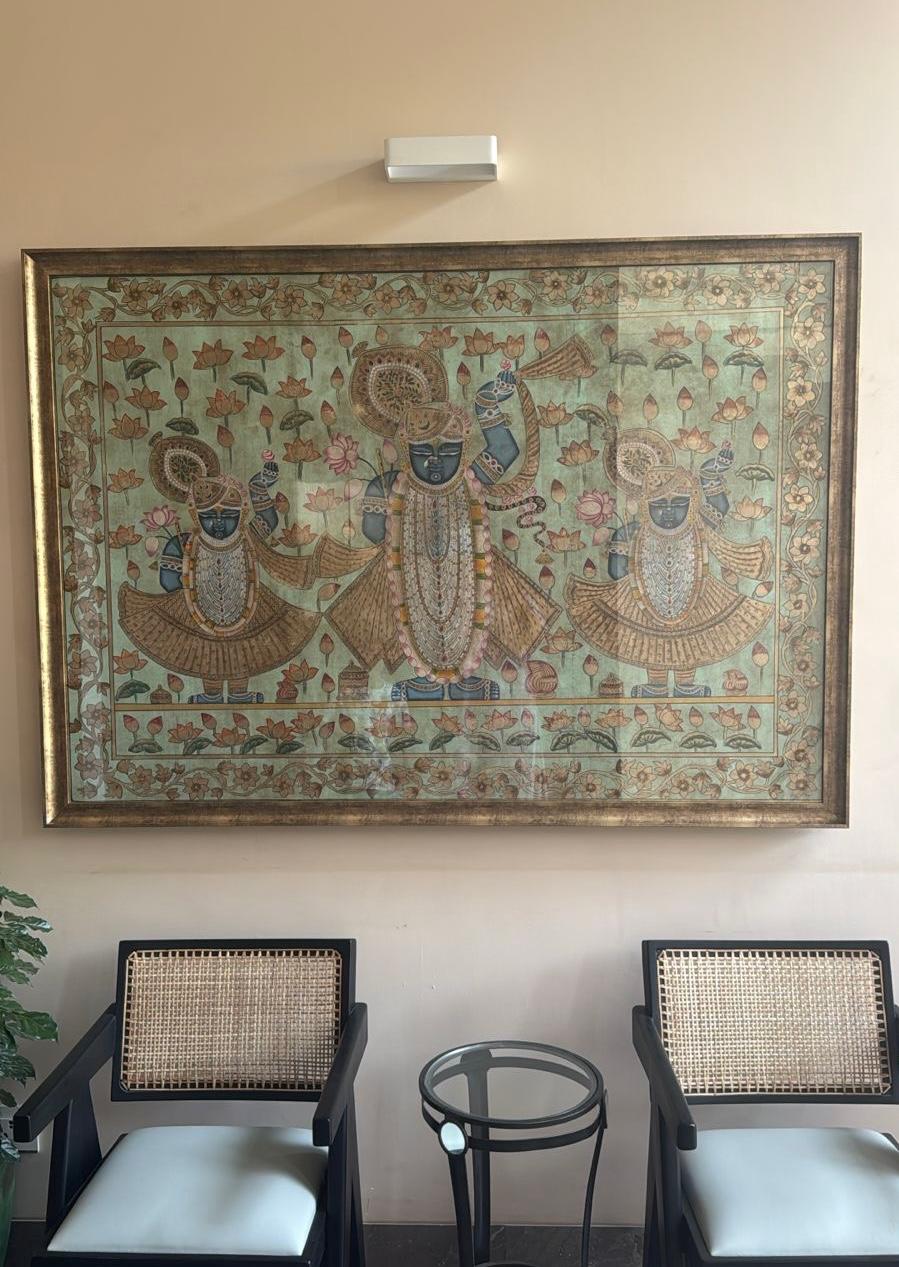
Indian art is not just meant to decorate walls — it is meant to live with you.
Where an artwork is placed can change how a room feels, how calm it becomes, and how connected you feel to the space.
This guide explains where Indian art works best in a home, room by room, in a simple and practical way.
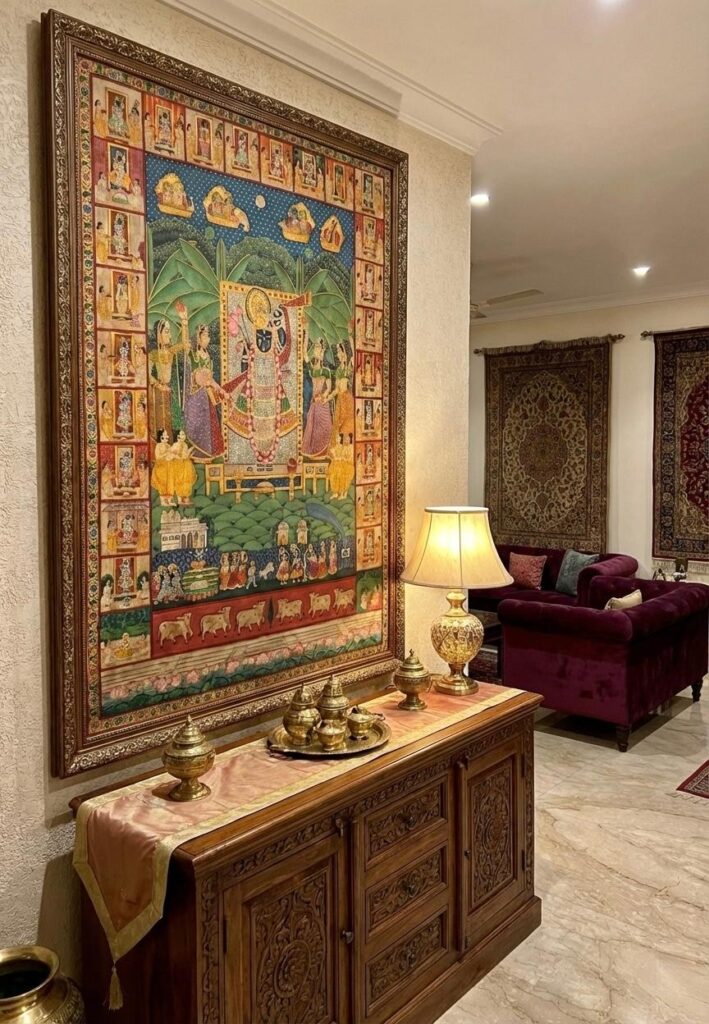
1. Living Room – Create the First Impression
The living room is where art naturally draws attention.
For this space:
- Choose artworks with strong presence and balance
- Traditional Indian art works beautifully as a focal point
- Avoid placing art too high — eye level is ideal
A thoughtfully placed artwork in the living room sets the tone for the entire home.
2. Bedroom – Choose Calm Over Drama
Bedrooms should feel restful.
For bedrooms:
- Soft, devotional, or balanced artworks work best
- Avoid overly busy compositions
- Place art where it is visible but not overpowering
Art in the bedroom should support calm and stillness, not stimulation.
3. Work or Study Area – Support Focus and Clarity
Art in workspaces should feel grounding.
Good choices include:
- Subtle traditional motifs
- Balanced compositions
- Art that feels steady rather than decorative
Avoid cluttering walls with too many pieces in work areas.
4. Pooja or Meditation Space – Respect the Space
If you have a spiritual or meditation corner:
- Choose art that feels respectful and intentional
- Traditional Indian artworks naturally belong here
- Keep the space uncluttered
Placement matters more than size in these areas.
5. Hallways and Transitional Spaces – Add Quiet Character
Hallways are often overlooked.
They are ideal for:
- Smaller artworks
- Pieces that gently guide movement
- Art that adds warmth without demanding attention
These spaces benefit from simplicity.
6. Trust the Feeling, Not Just the Rule
There is no perfect formula.
If an artwork:
- Feels right in a space
- Brings calm or meaning
- Makes you pause
Then it belongs there.
Good art settles into a home naturally.
Indian art has always been part of daily living — not something kept aside.
When placed with care, it becomes part of your routine, your rituals, and your sense of home.
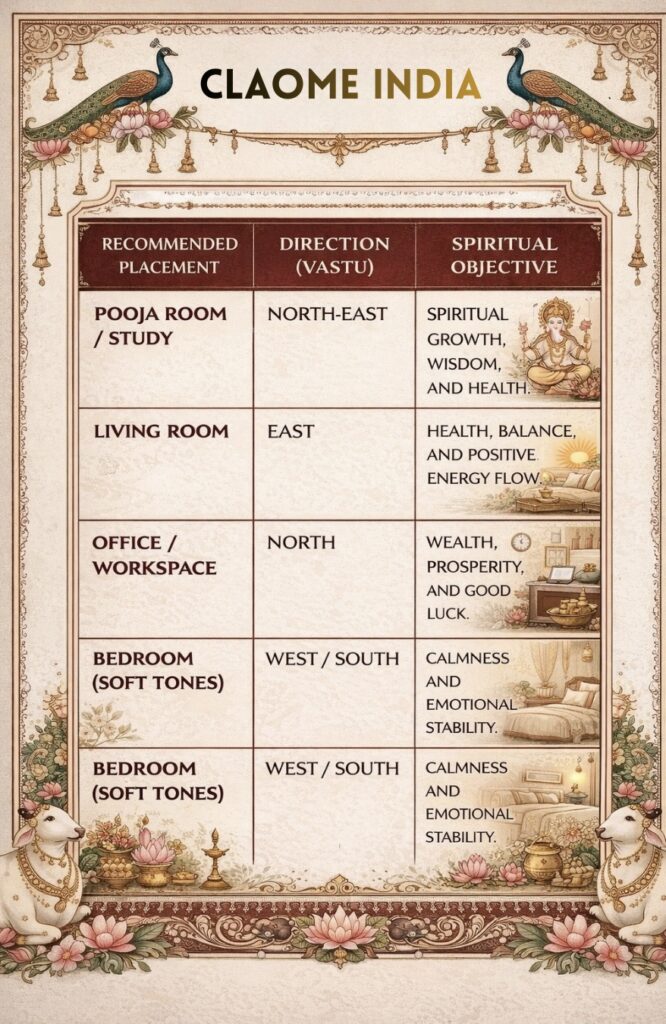
Before deciding on placement, it helps to understand how to identify genuine handmade pieces. This guide on how to choose authentic Indian art explains what to look for.