
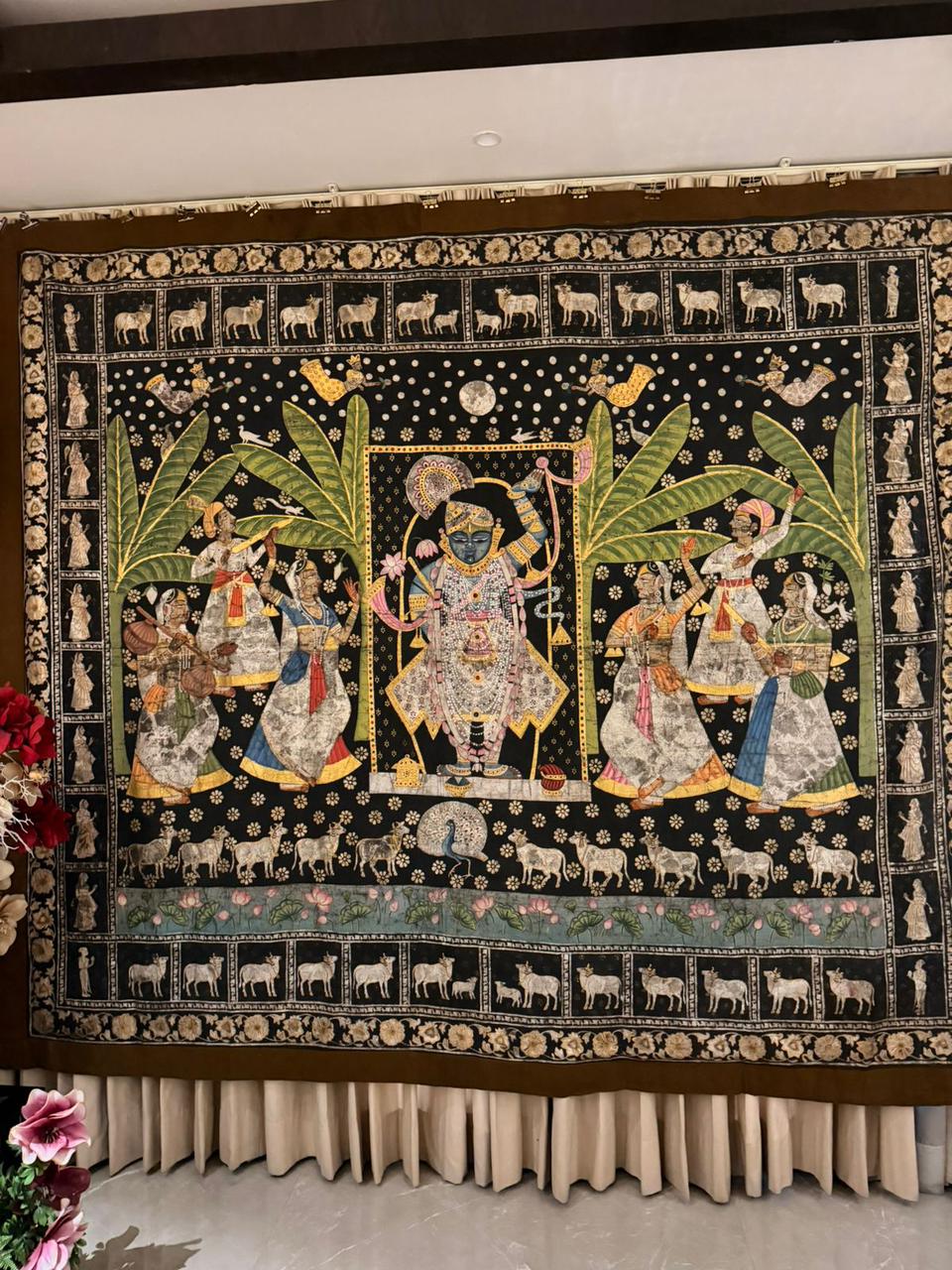
A Deccan painting is not made on paper. It starts with fabric, usually cotton or fine muslin, and turning that fabric into a hard, paintable surface takes close to six months on its own. This is the first reason authentic Deccan painting is considered one of the slowest handmade art forms still practised in India today.
Step 1: Preparing the Fabric Base (About 6 Months)
The cloth is first stretched tightly and fixed in place. A paste is then prepared using chuna powder and white zinc, mixed with a natural glue binder. This paste is applied to the fabric in thin layers, one at a time.
Each layer has to dry fully before the next one goes on. This is repeated many times over several weeks. Once enough layers have built up, the surface is rubbed down with a smooth stone, over and over, until it becomes hard, even and smooth to the touch. This burnishing is what allows the fabric to later hold fine paintwork and gold foil without the surface flaking or cracking.
This entire stage, from the first layer of chuna and zinc paste to a fully burnished, paint-ready surface, takes around six months.
Step 2: Drawing the Composition
Once the base is ready, the artist sketches the entire composition directly onto the fabric by hand. Figures, borders, jewellery, architecture and decorative patterns are all drawn freehand, with no printing or tracing involved.
Step 3: Applying Natural Colour
The colours used in a Deccan painting are natural stone pigments, ground and prepared by hand rather than bought ready-made. These are applied section by section, in layers, so the colour builds up gradually instead of going on in one flat coat.
Step 4: Gold and Silver Foil Work
Gold and silver foil is applied using the same paste-based method as the base preparation. A thin layer of chuna and zinc paste is applied exactly where the foil needs to go, such as jewellery, borders or garment detailing. The foil is then placed onto the wet paste and pressed down. Once it’s set, it’s burnished by hand so it sits flat and holds its shine.
This is done separately for every gold or silver section in the painting, which is why a single piece can involve hundreds of small foil applications.
Step 5: Fine Detailing
The final stage is the detailed brushwork: facial features, jewellery outlines, fabric folds and small decorative motifs. This is done with extremely fine brushes, and is usually the last thing added before the painting is left to fully set.
Total Time: Close to Two Years
Add it up, roughly six months for the fabric base alone, then months more for drawing, colour, gold and silver foil work, and fine detailing, and a single authentic Deccan painting can take close to two years from start to finish.
Explore next:
• Our Deccan Collection