
Introduction
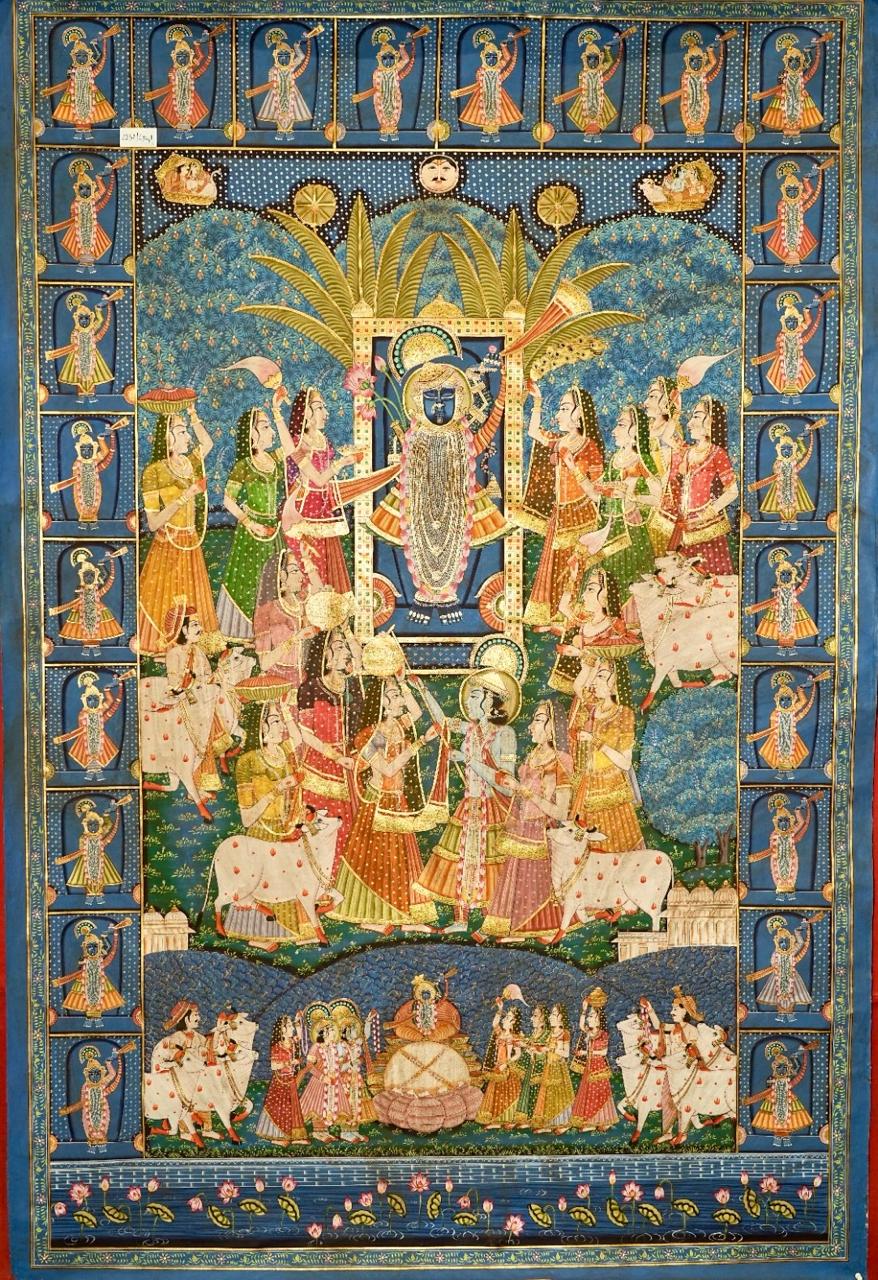
Pichwai art is more than a visual tradition — it is a sacred storytelling practice preserved for centuries. Originating in Nathdwara, Rajasthan, these intricate paintings were created to adorn temples and depict the divine life of Shrinathji.
Today, Pichwai art continues to hold cultural and artistic significance. If you are exploring handcrafted Indian art, understanding its history and authenticity is essential before investing in a meaningful piece.
If you would like to explore curated hand-painted works, you can browse our
👉 Pichwai Art Collection
1. What Is Pichwai Art?
Pichwai (meaning “that which hangs at the back”) refers to detailed hand-painted cloth artworks traditionally placed behind the idol of Shrinathji.
These artworks depict:
• Krishna’s life events
• Seasonal festivals
• Lotus motifs
• Sacred cows
• Temple architecture
To view contemporary interpretations of these themes, explore our
👉 Shrinathji & Temple Collection
2. Historical Roots of Pichwai
Developed in the 17th century in Nathdwara, Pichwai paintings aligned with temple rituals and festivals.
Each painting reflected:
• Changing seasons
• Devotional narratives
• Ritual calendars
Many of these traditional themes continue to influence our
👉 Hand-Painted Devotional Artworks
3. Symbolism in Pichwai Art
Understanding symbolism helps buyers choose meaningfully.
Lotus
Represents purity and spiritual awakening.
Cows
Symbolise abundance and pastoral harmony.
Shrinathji
Depicts Krishna lifting Govardhan Hill.
You can explore artworks featuring these motifs in our
👉 Traditional Pichwai Collection
4. How to Identify Authentic Hand-Painted Pichwai
With rising demand, printed reproductions have become common. To identify authenticity:
• Look for visible brush strokes
• Notice detailing in facial features
• Observe colour layering
• Ask about artist involvement
All Claome pieces are carefully curated to maintain traditional integrity within our
👉 Handcrafted Art Collection
5. Where to Place Pichwai Art in Modern Homes
Though temple-rooted, Pichwai adapts beautifully to contemporary interiors.
Ideal placements:
• Living rooms
• Meditation spaces
• Entryways
• Formal spaces
If you are unsure about sizing, you can directly
👉 Enquire via WhatsApp for personalised guidance
6. Choosing the Right Size & Composition
Before purchasing, consider:
• Wall dimensions
• Viewing distance
• Lighting
• Framing
7. Why Pichwai Art Holds Long-Term Value
Unlike trend-driven decor, Pichwai art:
• Preserves cultural heritage
• Reflects devotional craftsmanship
• Ages gracefully
• Retains spiritual relevance
Investing in authentic art is choosing permanence over trend.
Conclusion
Pichwai art represents patience, devotion, and refined craftsmanship. Whether placed in a sacred corner or modern interior, it carries a presence that extends beyond decor.
At Claome India, we curate handcrafted Pichwai artworks created with reverence for tradition and adapted thoughtfully for contemporary living.
To explore more:
• Read our guide on Where to Place Indian Art at Home
• Discover Why Handcrafted Indian Art Holds Lasting Value
• Explore our full Pichwai Art Collection